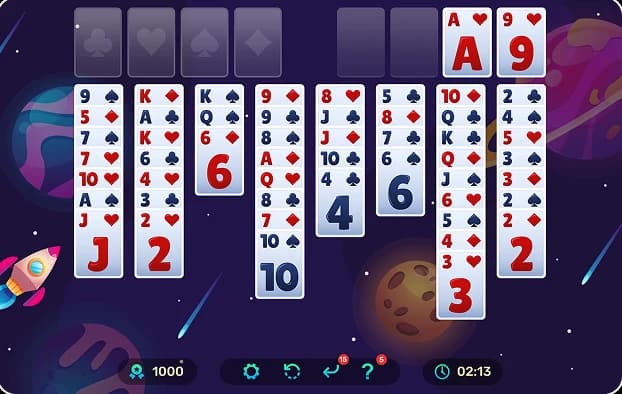
Card Games vs Board Games: Which Trains Your Brain Better ?


Card Games vs Board Games: Are you wondering which of these tabletop classics offers a superior workout for your cognitive health and mental acuity?
As far as mental acuity goes, there’s much more to getting into that box of cards or sitting down at a table than mere fun on a rainy day. Tabletop entertainment is an excellent mental exercise that encourages neuroplasticity and memory retention, not to mention helping prevent cognitive decline. However, while seeking to sharpen their minds in the most effective way possible, players frequently ask which format offers better cognitive benefits: cards or board games.
Even though both provide fantastic cognitive exercise, they target different areas of the brain. However, when considering only strategic problem-solving and its execution, certain standalone card games definitely come out ahead. If you are looking to test your own logic and put these cognitive principles into practice, you can easily play Freecell online right in your browser for a quick, high-focus mental workout.
Table of contents
Card Games vs Board Games for Brain Health: What is the Difference?
On the surface, there is similarity in that both types of games demand foresight, flexibility, and the ability to follow certain rules. The main difference, however, is that each type of game taps into one's executive function differently. When looking at popular Freecell vs Solitaire options, most of the time traditional tabletop activities involve physical action, socializing, and large-scale spatial awareness on an expansive playing space. It usually imitates economy, territory, and narrative.
Most of the time, however, card games are about managing information, recognizing patterns, and quick tactical maneuvering. Since cards are small and are frequently shuffled, one has to process probabilistic and spatial relationships locally. Both games can stimulate the prefrontal cortex, which is associated with decision-making and self-control, through distinct cognitive processes.
Are Board Games Good for Brain Training?
Classic tabletop strategy and modern hobby board games are fantastic tools for cognitive development. When you start playing an intricate board game, your mind has to do a lot of multi-stage forecasting. You have to predict what your opponents will do and adjust your plans to the changing situation on the board. However, if you keep playing checkers online or its different variant, Russian checkers, which is harder, it will help your brain think in a better way.
This style of play heavily exercises your working memory and cognitive flexibility. Furthermore, many board games are social experiences. Interacting with other players, reading body language, and negotiating introduce emotional intelligence and communication processing into your mental workout. If your goal is to build broad strategic thinking and social-cognitive skills, traditional tabletop games deliver a robust exercise.
Do Card Games Improve Mental Agility?
Shifting to card-based play introduces a different kind of mental rigor. When exploring variants like double freecell, card games often require you to work within strict constraints of hidden variables, probabilities, and sequential dependencies. Because cards change hands or reveal themselves one by one, your brain must constantly update its internal model of the game state.
It makes decisions instantaneously and improves working memory, as you are always analyzing risk, recognizing patterns, and adjusting your strategy based on circumstances. Whereas board games can take up to a couple of minutes per turn with players doing nothing but sitting around, playing card games requires immediate attention and adaptability and is therefore an excellent way of enhancing mental sharpness.
Why FreeCell is the Ultimate Brain Training Game
When examining card-based logic puzzles, FreeCell stands in a league of its own as a cognitive workout. For anyone looking for ideal freecell games for the brain, this pastime becomes a pure test of algorithmic thinking and spatial reasoning, since every standard game is mathematically solvable, unlike traditional luck-driven card variants.
The core mechanic that makes FreeCell an elite brain trainer is the inclusion of the four open cells. These temporary storage slots serve as an external working-memory buffer, forcing your brain to calculate moves several steps ahead. To clear the tableau and build foundations from Aces up to Kings, you cannot simply react to the card currently in front of you. You must break down a complex, tangled layout into sequential, manageable mini-goals.
This requires high-level executive functioning. You have to evaluate the cost of temporarily parking a card in an open cell versus keeping it free for future maneuvers. By engaging in this deep forward-planning and pattern recognition, you actively challenge your brain's ability to sequence complex tasks and solve problems efficiently under rigid constraints.
FreeCell vs Board Games: Which Sharpens Focus Better?
The distinction when comparing FreeCell to conventional games as a tool for daily mental exercise lies in speed, knowledge, and focus management.
Board games are typically turn-based and communal, which means your cognitive engagement fluctuates as you wait for other players to complete their turns. FreeCell offers uninterrupted, high-focus analytical bursts. It is a game of perfect information; every card in the tableau is visible from the very beginning. There is no hidden luck or interference from opponents.
This makes FreeCell superior for isolating and training pure logic, concentration, and spatial problem-solving. While board games excel at building social strategy and multi-player adaptability, FreeCell provides a focused, zero-distraction environment that hones deep analytical concentration in a matter of minutes.
How to Train Your Brain with Daily Puzzle Games
One of the best ways to ensure your brain's well-being in the future is to incorporate logic puzzles into your daily schedule. Just like exercise develops muscles in our body, brain training helps us build neural connections and increase problem-solving skills. Just as you might master the basics of how do you play checkers, sharpening your mind with card logic requires understanding the underlying rules.
You do not have to allocate much free time to do so either. Spending about 10 to 15 minutes per day playing FreeCell, which is a great cognitive exercise, is a fantastic way to clear your head. Allowing yourself to treat these games as an actual brain-training session and making sure you play them properly is key.
Finally, the decision about whether you want card games or board games depends on what kind of mental exercise you seek. If board games provide you with excellent social interaction and long-term strategizing opportunities, engaging in a single logic activity will present you with a unique chance to concentrate fully.
With such an attitude toward your daily activities, you will quickly hone your analytical thinking skills and keep your brain active all at once.
Frequently Asked Questions
- Playing card games tends to put more pressure on working memory because it is necessary for tracking the changes in variables, sequence, and probabilities within a small playing field. On the other hand, board games are equally effective memory boosters, as they require more advanced memory skills, such as remembering rules and players' strategies.
- FreeCell enhances cognitive abilities by testing spatial reasoning, working memory, and algorithmic thinking. Since players use the four open spaces as storage areas, they will have to plan their next steps to solve problems systematically.
- A good brain workout game should require problem-solving without relying on luck. Individual logic and card games, such as FreeCell, make a good choice since they provide a good mental exercise that takes little time to complete.
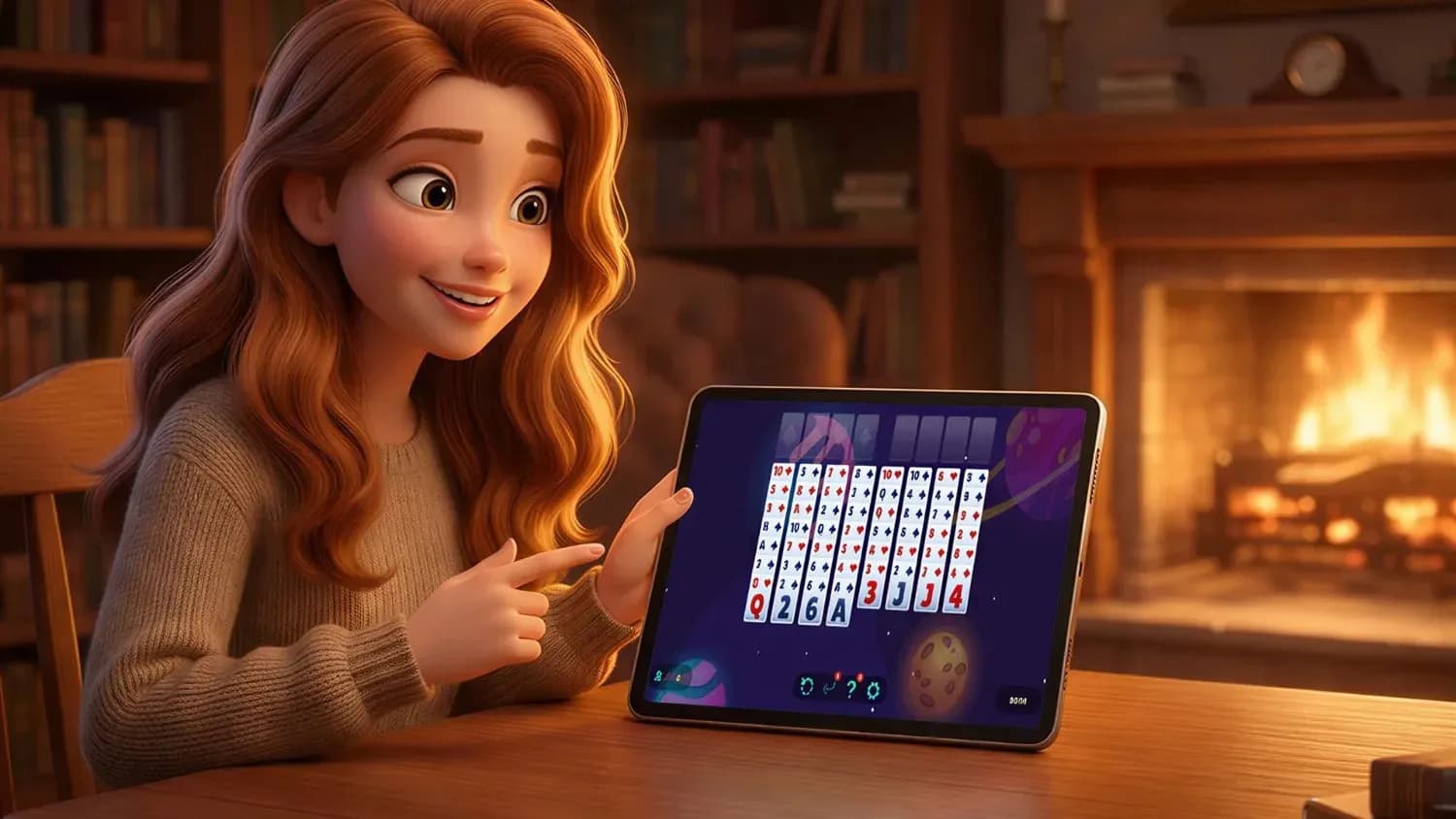
FreeCell.game vs Other FreeCell Websites: Best Comparison
FreeCell.game vs other FreeCell websites compared by speed, ads, mobile support, solvers, and numbered deals. Discover the best FreeCell site online.
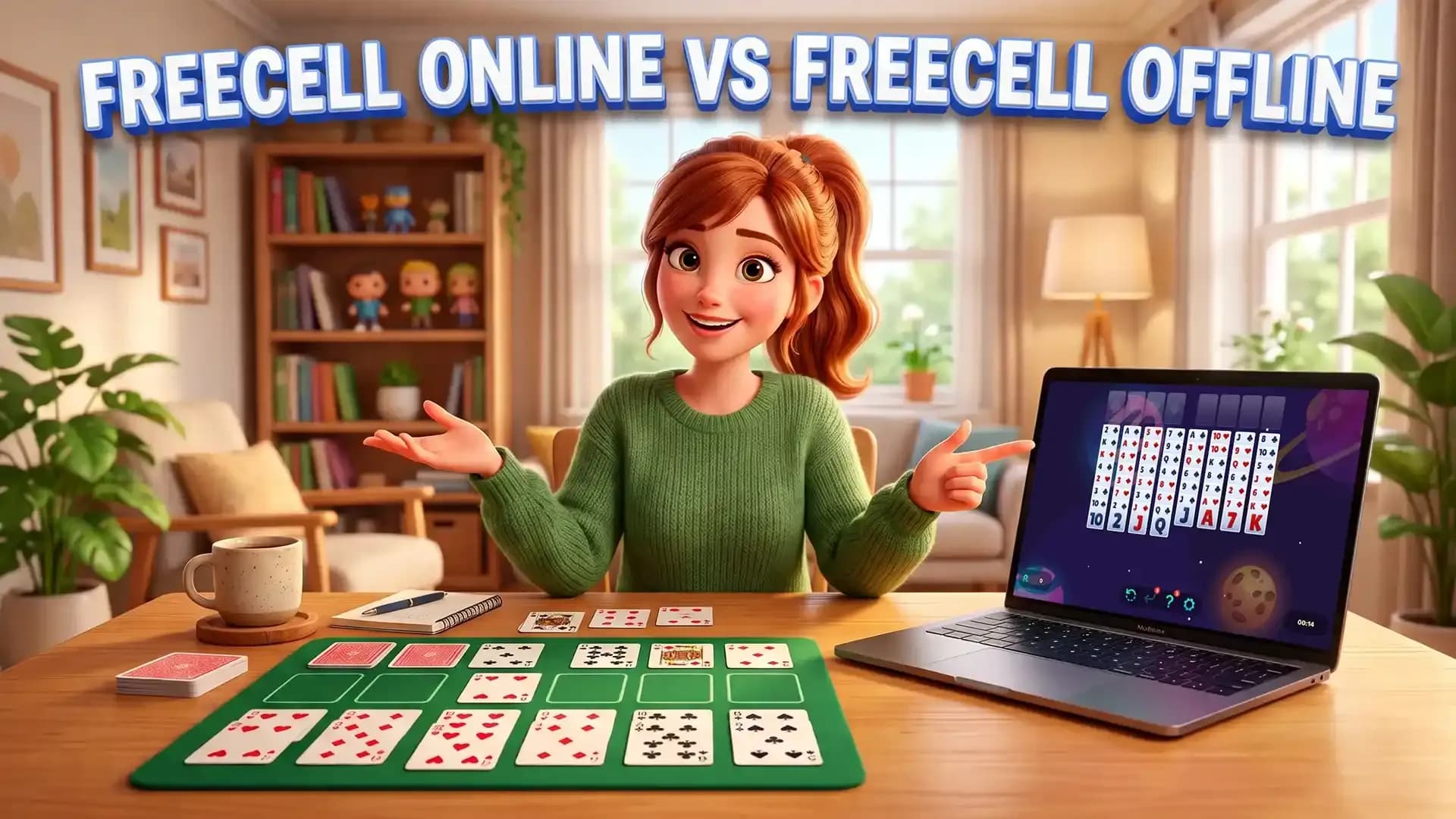
Why More People Are Switching From Offline FreeCell to Online Play
Find out why players are moving from classic desktop FreeCell to browser-based play and what online versions offer today.
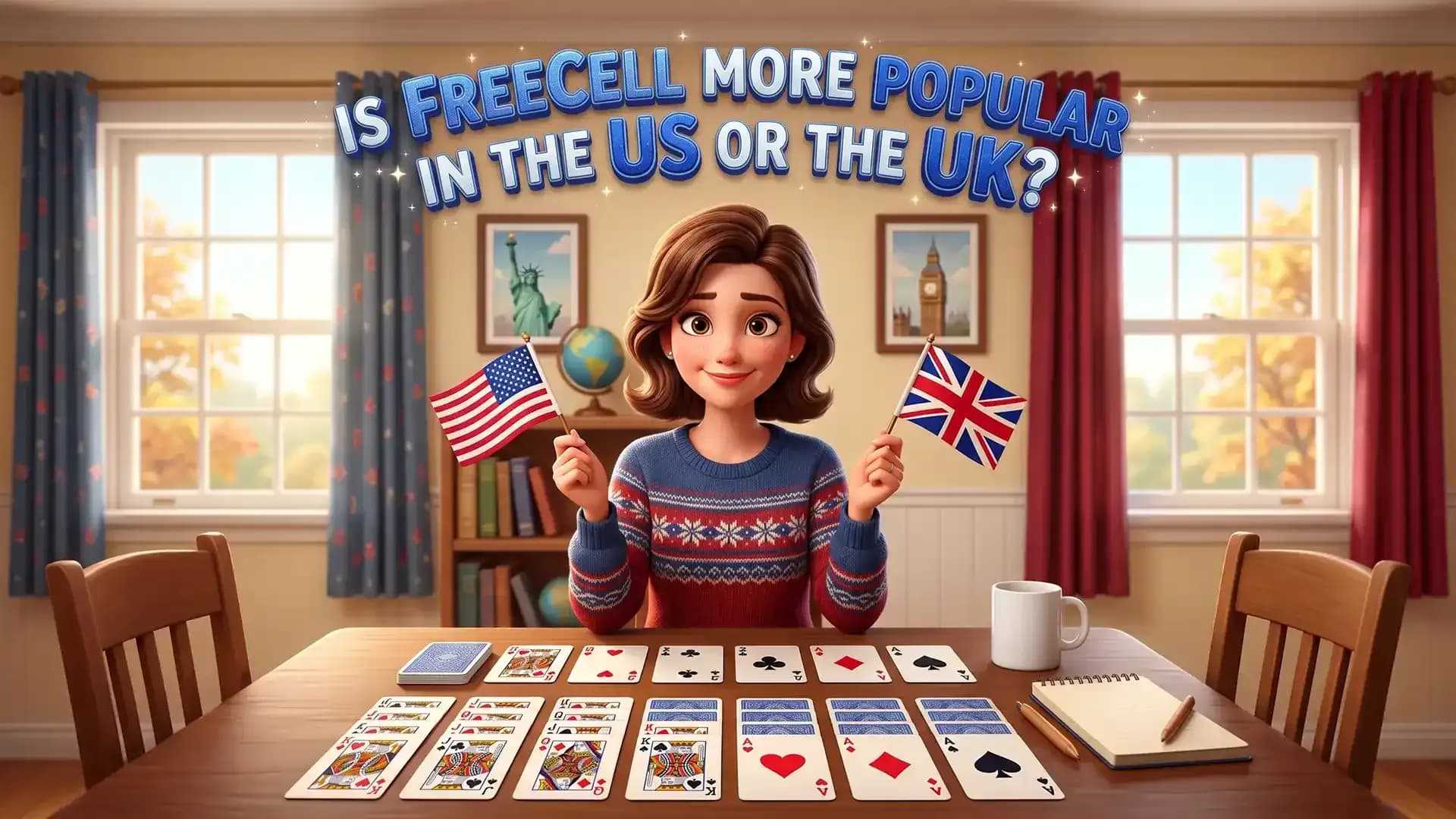
Is FreeCell More Popular in the US or the UK? What the Data Says
Compare FreeCell popularity in the US and UK using search volume, per-capita data, and player interest.
Is Every Game of FreeCell Winnable? Strategy & Tips
Is every game of FreeCell winnable? Learn the truth behind FreeCell solvability, why most games can be won, and what makes some deals impossible.

How to Win FreeCell: Proven Tips to Beat Every Game
Learn how to win FreeCell with proven strategies, smart planning, and simple tactics that work on every deal. Improve your skills and start winning more games today!