Types of Solitaire: 12 Different Solitaire Games You Should Know


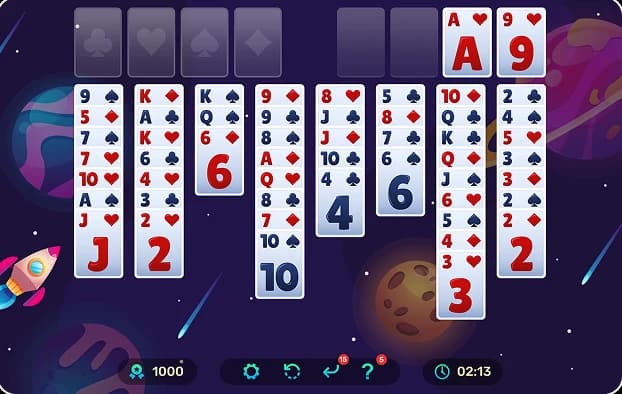
Solitaire is one of those things people come back to again and again. A slow Tuesday afternoon, a long flight with nothing to do, five minutes to kill before a meeting, the playing cards are always there. Sometimes the game flows beautifully. Other times, everything grinds to a halt and the deck just refuses to cooperate. That tension between control and luck is what makes it stick. Most folks know the basic Klondike version. It's the one that came pre-installed on old computers, the one with the bouncing card animation when you win. But dig a little deeper and the landscape opens up fast. Looking to play online FreeCell instead of the usual routine is a fun way to kill boredom.
What makes the types of solitaire worth exploring isn't just variety for variety's sake. Each version has its own personality. Some are fast and forgiving. Others demand patience and punish sloppy moves. Knowing which different solitaire games fit the moment can turn a casual habit into something you actually look forward to.
Table of contents
- Which Type of Solitaire Should You Play?
- How Many Types of Solitaire Are There?
- What Makes Solitaire Variants Different? (The 5 Key Factors)
- Quick Comparison: All 12 Types of Solitaire at a Glance
- Beginner Types of Solitaire Card Games
- Intermediate Types of Solitaire Games
- Advanced and Expert Types of Solitaire
- The Bottom Line
Which Type of Solitaire Should You Play?
| Goal / Preference | Recommended Solitaire Variant |
|---|---|
| Want the classic, most familiar experience | Klondike Turn 1 |
| Looking for a bigger challenge with the same classic feel | Klondike Turn 3 or Yukon |
| Want the highest chance of winning | FreeCell or TriPeaks |
| Need a quick, low-pressure game (under 10 minutes) | Golf or Pyramid |
| Want to ease into Spider Solitaire | Spider (1-Suit) |
| Ready for a serious long-term challenge | Forty Thieves or Spider (4-Suit) |
| Want something different from sequence-building gameplay | Pyramid or Crescent |
| Enjoy unpredictable, casino-style gameplay | Canfield |
The best way to decide is simply jumping in and trying them. Most online versions let you undo moves or get hints while learning. Beyond the fun, Solitaire type like FreeCell offers real freecell brain benefits.
How Many Types of Solitaire Are There?
You’d be surprised how many types of solitaire card games people have created over the years. The game dates back to the 1700s in Europe, and since then it’s branched into hundreds of variations. Some are super simple, others incredibly complex. The exact count depends on who you ask, but the good news is you don’t need to try them all at once. Start with a few favorites, and you’ll naturally discover which ones fit your style best. The variety comes from tweaking just a handful of rules, which completely changes the feel of the game.
What Makes Solitaire Variants Different? (The 5 Key Factors)
What separates one game from another? It usually boils down to five main things that shape how each round plays out.
1. Number of Decks
Some games stick with a single 52-card deck, keeping things straightforward. Others, like Spider or Forty Thieves, double up to 104 cards. More cards often mean bigger tableaus and longer, more involved sessions.
2. Tableau Shape
The way cards get laid out makes a huge difference. You might see straight columns like in Klondike, a towering pyramid, or even a curved crescent arrangement. This setup determines which cards stay hidden and how easily you can reach them.
3. Sequencing Rules
This is where things get interesting. Some versions want you building descending sequences with alternating colors. Others demand same-suit runs or simple pairing based on ranks. These rules dictate the kind of thinking you’ll need.
4. Stockpile Rules
How you draw extra cards varies a lot. You might flip through the stock endlessly, only once, or have no stock at all. In some games the stock deals new cards across the whole tableau, adding fresh opportunities or roadblocks.
5. Win Condition
Most games end when you build complete foundation piles by suit. But pairing-style games win by clearing every card from the main layout. That shift from building up to tearing down changes your whole strategy.
Quick Comparison: All 12 Types of Solitaire at a Glance
To help you get oriented, here’s a quick side-by-side look at these games. Win rates are rough averages.
| Game | Decks | Difficulty | Win Rate (Approx.) | Avg. Time | Best For |
|---|---|---|---|---|---|
| Klondike (Turn 1) | 1 | Beginner | 30-35% | 5–10 min | New players |
| Klondike (Turn 3) | 1 | Beginner | 10-15% | 10–15 min | Fans of the classic |
| FreeCell | 1 | Beginner | 80-99% | 10–15 min | Strategy fans |
| Pyramid | 1 | Beginner | 40-50% | 5–10 min | Casual quick plays |
| TriPeaks | 1 | Beginner–Intermediate | 70-90% | 5–10 min | High-success seekers |
| Spider (1-Suit) | 2 | Beginner–Intermediate | 60-80% | 15–20 min | New to Spider |
| Yukon | 1 | Intermediate | 20-25% | 15–20 min | Klondike lovers wanting more |
| Golf | 1 | Intermediate | 5-10% | Under 10 min | Fast sessions |
| Spider (2-Suit) | 2 | Intermediate | 30-40% | 20–25 min | Building confidence |
| Scorpion | 1 | Advanced | 5-20% | 20–30 min | Tactical minds |
| Forty Thieves | 2 | Expert | 5-10% | 30+ min | True challenge hunters |
| Canfield | 1 | Expert | 5-10% | 20–30 min | Casino-style variety |
Crescent usually lands in the advanced group thanks to its unique dual foundations. These games also make wonderful card games for family gatherings.
Beginner Types of Solitaire Card Games
If you’re just getting into different types of solitaire, these are fantastic entry points. They’re approachable but still give you that satisfying “I did it” feeling.
1. Klondike Solitaire (Turn 1 & Turn 3)
This is the one most people picture when they hear types of solitaire. You deal seven columns, building descending alternating-color sequences while moving cards up to the four suit foundations. Turn 1 lets you flip single cards from the stock whenever you want. Turn 3 makes it trickier by showing three at a time. It’s familiar, forgiving for beginners, and endlessly replayable.
2. FreeCell Solitaire
Everything starts face up, so no hidden surprises. You get four free cells to temporarily park cards, which opens up all kinds of clever rearrangements. Empty columns accept any card, not just kings. It feels more like a puzzle you can solve with careful planning rather than pure chance. People may have a question: how to win FreeCell? So the answer is simple. Study the rules and practice.
3. Pyramid Solitaire
The cards form a big pyramid shape. Your job is pairing exposed cards that add up to 13. Kings count as 13 by themselves. Suits don’t matter here, which simplifies things. You get one pass through the stock, so timing those draws matters. Clearing that pyramid is oddly satisfying.
4. TriPeaks Solitaire
Picture three little mountains of cards. You remove tableau cards that are one rank higher or lower than the current waste pile card. It moves fast and often ends with a high success rate once you spot the patterns. The visual layout makes it fun to watch unfold.
5. Spider Solitaire (1-Suit)
Using two decks but only one suit keeps it manageable. You build full king-to-ace sequences of the same suit right in the tableau. You can move mixed sequences temporarily, but only completed same-suit runs go to foundations. It’s a gentle introduction to more advanced Spider play.
Intermediate Types of Solitaire Games
Once the easy ones feel too easy, these different types of solitaire games are the most popular card game around the world.
6. Yukon Solitaire
Similar to Klondike but with no stockpile, in this game every card starts on the table. You can drag entire groups of cards together even if they’re not perfectly sequenced, as long as the top card fits the rule. This extra mobility creates exciting chain reactions but requires thinking several moves ahead.
7. Golf Solitaire
All tableau cards are visible from the start. You pair them with the waste pile card if they’re exactly one rank away (no wrapping around from king to ace). One stock pass only keeps the pressure on. Short games make it perfect when you only have a few minutes.
8. Spider Solitaire (2-Suit)
Same setup as the one-suit version but now with two suits to manage. The added difficulty forces you to plan more carefully when forming those complete sequences. Many players find this the sweet spot for regular play.
9. Scorpion Solitaire
It mixes ideas from Spider and Yukon. Build same-suit descending runs in the tableau and move unsorted stacks if the top card matches properly. The limited three-card stock adds tension without being overwhelming.
Advanced and Expert Types of Solitaire
These are for when you’re ready to get serious about types of solitaire.
10. Forty Thieves
Two full decks create a massive 10-column tableau. You can only move one card at a time, same-suit descending builds only, and just one pass through the stock. It’s a real test of patience and precision.
11. Canfield Solitaire
A reserve pile of 13 cards sits on the side. The first foundation card sets the starting rank for all foundations, and builds can wrap from king back to ace. The randomness keeps every game feeling different.
12. Crescent Solitaire
Another two-deck game with a curved tableau and eight foundations; four building up from aces, four going down from kings. You move single cards and have a limited shuffle option. Tracking both directions keeps your brain fully engaged.
The Bottom Line
At the end of the day, types of solitaire offer something for pretty much everyone. Some days you might want a relaxing classic, other times a real mental workout. The important thing is finding the ones that click for you and enjoying the process. Whether you're looking for card games for teens, quick brain breaks, or something to unwind with, this list has you covered. Fire up a game, shuffle those cards (real or digital), and see where it takes you. You might just discover a new favorite way to pass the time.
FAQs
- There are many, ranging from building games like Klondike to pairing styles like Pyramid. The 12 covered here represent some of the most played.
- Klondike is still the clear favorite for most people.
- FreeCell and TriPeaks tend to have higher success rates thanks to full visibility and forgiving mechanics.
- Forty Thieves, Canfield, and Scorpion usually top the list for difficulty.
- Hundreds of named versions exist, though they mostly fall into a few main families.
- Nothing major, they’re different names for the same single-player card games. “Patience” is more common in places like the UK.
FreeCell.game vs Other FreeCell Websites: Best Comparison
FreeCell.game vs other FreeCell websites compared by speed, ads, mobile support, solvers, and numbered deals. Discover the best FreeCell site online.

Card Games vs Board Games: Which Trains Your Brain Better ?
Discover whether card games or board games provide better brain training for memory, focus, strategy, and problem-solving.
Why More People Are Switching From Offline FreeCell to Online Play
Find out why players are moving from classic desktop FreeCell to browser-based play and what online versions offer today.
Is FreeCell More Popular in the US or the UK? What the Data Says
Compare FreeCell popularity in the US and UK using search volume, per-capita data, and player interest.

Is Every Game of FreeCell Winnable? Strategy & Tips
Is every game of FreeCell winnable? Learn the truth behind FreeCell solvability, why most games can be won, and what makes some deals impossible.