Freecell Game Types: Rules & Differences


There are around 10 to 15 FreeCell Types you can play the FreeCell Game Online, like Standard Freecell, Baker’s Game, Eight off, and many more.
These variants change the rules in small but important ways: some offer a more gentle learning curve, while others introduce challenges that test even advanced players.
This guide will help you choose the FreeCell version that best suits your needs as we look at each major version.
Table of contents
What Defines a FreeCell Type?

Each FreeCell variation changes one or more parts of the game. These small adjustments create completely new experiences. Here are the elements that usually change:
Number of Free Cells
Some versions use more free cells, making the game easier. Others reduce them, adding difficulty.
Tableau Structure
The number of tableau columns may increase or decrease. The way cards are arranged also varies.
Foundation Rules
Aces might start in the foundation in some variations, changing early game choices.
Open or Hidden Cards
Classic FreeCell shows every card, but some FreeCell game variations hide cards until they are uncovered.
These rule tweaks build different styles of gameplay. Some feel like puzzles while others feel like fast-paced challenges. This range of styles is exactly why so many players go searching for a 123 FreeCell alternative once they want something beyond the basic setup.
The Standard (Classic) FreeCell Version

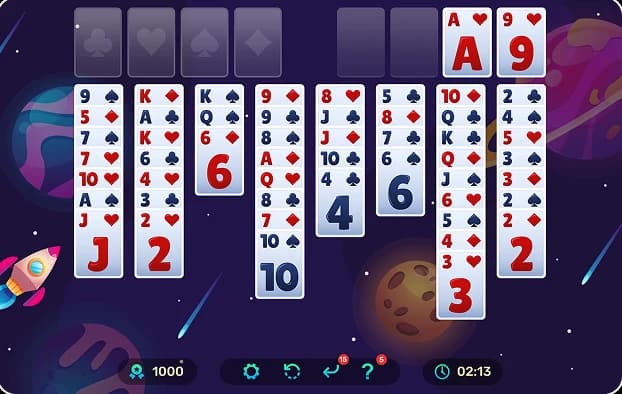
The classic version is the best-known and most widely played. It uses:
- 4 free cells
- 8 tableau columns
- Aces starting in the tableau
- Fully visible cards
This version balances challenge and accessibility. Most deals are winnable, and they reward careful planning without feeling overwhelming.
If you are exploring freecell types for the first time, this classic version is the perfect place to start. Many players consider it the “default” FreeCell experience. But before all this, you should know How to Play the FreeCell Card Game.
Popular FreeCell Types and Variations
Below are the most well-known and widely played FreeCell game variations. Each one has a different flavor and skill level.
If you’re also looking for FreeCell Alternatives, these versions offer different styles and difficulty levels. Each one has a different flavor and skill level.
Classic FreeCell

This is the original and most popular version of the game. It has 4 free cells, 8 columns for playing cards, and you can see all the cards from the start. It's a balanced game that is good for both beginners and experienced players.
Baker's Game

Baker's Game is the direct ancestor of FreeCell. It looks similar but has one major difference: you build tableau sequences by suit instead of alternating colors. This makes the game much harder because you have fewer legal moves.
It is ideal for players who enjoy deep strategy and long-term planning. If classic FreeCell feels too easy, Baker's Game is the next step.
Eight Off
Eight Off Solitaire uses eight free cells, which gives you more room to move cards. The tableau builds by suit, similar to Baker's Game. The combination makes it easier than Baker's Game but still more challenging than classic FreeCell.
Eight Off has a unique rhythm that appeals to players who like structured card flows and slower, more methodical play, especially when following clear Eight Off Solitaire Rules.
Seahaven Towers
Seahaven Towers uses ten tableau columns and four reserve cells. Many cards are placed differently at the start, creating a more tactical experience.
This version requires careful column balancing because the increased number of columns leads to more complex structures. It is great for players who enjoy planning ahead and solving problems step by step.
Penguin
Penguin has one of the most interesting starting setups. It begins with a special card known as the “card of the day” already placed in the foundation. The rest of the game revolves around building around that card.
Penguin has a distinctive flow and feels more like a puzzle than traditional FreeCell. It is perfect for players who like variety and want something different from standard layouts.
ForeCell
ForeCell starts with all Aces already in the foundation. This speeds up gameplay and reduces early blockage.
Because of the faster tempo, ForeCell is good for players who want quick wins or shorter sessions. It simplifies the early moves while still keeping the mid-game interesting.
FreeCell Blind Variants
Blind versions hide certain cards until they are uncovered. This makes FreeCell much harder because you cannot plan.
Blind variations are meant for experts only. If you enjoy high difficulty and uncertainty, this is one of the toughest FreeCell types you can try.
Relaxed FreeCell
Relaxed FreeCell is an easier variant with softer rules. You can move complete sequences even without the correct number of free cells. This dramatically increases your chances of winning.
It is ideal for beginners and casual players who want a smoother, more forgiving experience.
Lesser-Known FreeCell Versions

Here are a few less common but still fascinating options for players who enjoy exploring FreeCell game variations.
Challenge FreeCell
This version changes difficulty by reducing the number of free cells or altering foundation rules. It is designed to test advanced players.
Large-Deck or Double-Deck FreeCell
This variation uses two decks, giving you 104 cards and expanded tableau columns, following specific Double FreeCell Rules that require deeper planning and careful sequencing. The game becomes more complex but also more impressive. It requires extra planning and patience.
Open Cell Variants
Some variations use a larger number of visible reserve cards. More open cells make the game easier and give the player a clearer overview of possible moves.
Multi-Stage FreeCell
In these creative versions, new rules are introduced during gameplay. For example, additional free cells might open later, or foundation rules may shift mid-game. This adds unpredictability and novelty.
How the Different FreeCell Types Compare

Each FreeCell type appeals to different players. Here is a simple comparison to help you decide which one fits your style. It also depends on your FreeCell Strategy, which makes the game easier or harder.
Many of these variations are already available inside the Top FreeCell Apps, where players can switch between classic FreeCell, Baker’s Game, and other versions easily.
Difficulty Level
Easiest
- Relaxed FreeCell
- ForeCell
Moderate
- Classic FreeCell
- Eight Off
- Double Freecell
Hardest
- Baker’s Game
- Seahaven Towers
- Penguin
- Blind FreeCell versions
Best for Beginners
- Classic FreeCell
- Relaxed FreeCell
These are easy to understand and build confidence.
Best for Advanced Players
- Baker’s Game
- Seahaven Towers
- Penguin
These require deeper planning and problem-solving.
Best for Fast Games
- ForeCell
- Relaxed FreeCell
Both offer quicker wins and shorter matches.
Final Thoughts – Explore FreeCell Versions and Play Smarter
There are so many FreeCell types, each of them allowing you to experience this classic card game in an utterly different way. Learning new variations helps you enhance your skills, learn new tactics, and improve your knowledge of logical steps in the game. There are many Benefits of the FreeCell Game for your brain.
Whether you want a relaxing session or a serious challenge, there is a FreeCell variation perfect for you. Use this guide to explore the FreeCell versions, each explained clearly, and choose the one that matches your play style.
Start experimenting with new FreeCell types and enjoy the game in exciting new ways.
FAQs
- Classic FreCell or Relaxed FreeCell are the easiest. They are simple to understand and give you more chances to win.
- Each version changes small rules like the number of free cells, how the tableau is arranged, or how you build the foundation. These changes make each type feel different to play.
- Baker’s Game, Seahaven Towers, and Penguin are the most difficult because they need more planning and fewer easy moves.
FreeCell.game vs Other FreeCell Websites: Best Comparison
FreeCell.game vs other FreeCell websites compared by speed, ads, mobile support, solvers, and numbered deals. Discover the best FreeCell site online.

Card Games vs Board Games: Which Trains Your Brain Better ?
Discover whether card games or board games provide better brain training for memory, focus, strategy, and problem-solving.
Why More People Are Switching From Offline FreeCell to Online Play
Find out why players are moving from classic desktop FreeCell to browser-based play and what online versions offer today.
Is FreeCell More Popular in the US or the UK? What the Data Says
Compare FreeCell popularity in the US and UK using search volume, per-capita data, and player interest.

Is Every Game of FreeCell Winnable? Strategy & Tips
Is every game of FreeCell winnable? Learn the truth behind FreeCell solvability, why most games can be won, and what makes some deals impossible.