13 Best Memory Games for Kids That Boost Brain Power

Have you ever wondered why things like "How can I help my child focus?" are not unusual questions to ask? Or have you caught yourself looking at your child who is looking at his/her book blankly? Then you’re not alone because there are plenty of other parents seeking solutions online on how to get their children to concentrate. But then there’s an easy solution: play games.
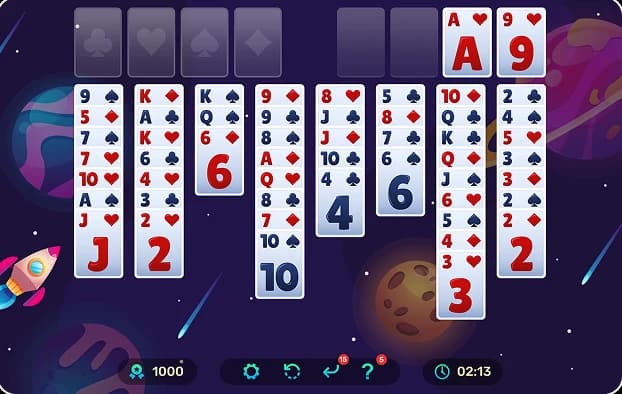
There are special brain games that can develop a child's thinking skills, memory, and concentration capabilities very fast. Playing FreeCell over the internet can be a great way to combine brain exercises with a game.
Table of contents
- Why Memory Games for Kids Actually Work (The Science in 60 Seconds)
- Best Memory Games For Kids
- Best Memory Games for Kids to Play at Home (No Screen Required)
- Memory Activities for Students in the Classroom
- Online Memory Games for Kids: Best Free Digital Options
- Memory Games for Kids by Age: Quick Reference Guide
- How to Boost Memory Power in Kids Beyond Games
Why Memory Games for Kids Actually Work (The Science in 60 Seconds)
Many parents wonder whether a memory game for kids is actually useful or just a distraction. According to child development experts, these games do a lot of heavy lifting. The table below shows how specific types of kids' memory games target and build critical learning skills:
| Activity Focus | Target Benefit | Why It Matters for Students |
|---|---|---|
| memory activities for students | Teaches the mind to hold, organize, and find information fast. | Builds mental strength for better school performance. |
| memory game for students | Actively works out the front part of the brain. | Directly improves focus, planning, and short-term recall. |
| memory power games for kids | Strengthens daily attention control and mental stamina. | Gives kids a strong foundation for learning and problem-solving. |
A child's brain is highly flexible, always creating connections. Whenever the child plays any game, be it digital or traditional, continuous playing develops mental toughness.
Best Memory Games For Kids
The mind of a kid will be trained to think faster and more sharply through such mind games, and playing FreeCell online lets one practice brain-training techniques with card-matching games.
Below are 13 highly recommended brain-training games and activities that foster cognitive development:
Here is a clean summary layout of all 13 focus-building classroom games covered across our session, tracking their core mechanics and cognitive target areas.
| # | Game | Primary Skill | Core Classroom Activity |
|---|---|---|---|
| 1 | Online Card Matching | Visual Working Memory | Finding identical image pairs within a shifting digital grid. |
| 2 | Simon Says Digital | Pattern Tracking | Following and repeating growing sequences of light and sound. |
| 3 | Beat the Drum | Auditory Memory | Listening to a live physical rhythm and replicating it as a group. |
| 4 | What Do You Remember? | Visual Detail Recall | Examining a busy picture for 60 seconds and answering detail questions. |
| 5 | Story Sequence Memory | Auditory Sequencing | Listening to a short paragraph and retelling the plot events in order. |
| 6 | FreeCell Challenge | Strategic Logic | Moving open cards collectively on the board without locking sequences. |
| 7 | Chess Puzzle | Tactical Problem Solving | Analyzing a layout to find a single, safe checkmate move. |
| 8 | Solitaire Sequencing | Visual Sorting | Organizing rows of cards by rank and alternating color paths. |
| 9 | Sudoku Grid | Numerical Logic | Using the process of elimination to fill in the missing grid numbers. |
| 10 | Mahjong Stack | Pattern Recognition | Scanning multi-layered layouts to pair open, unblocked tile symbols. |
| 11 | Freeze Dance Focus | Inhibitory Control | Moving to music and instantly stopping physical motion when it pauses. |
| 12 | Category Chain | Semantic Retrieval | Passing a topic around the room where each player adds a unique item. |
| 13 | The Missing Object | Spatial Memory | Spotting which desk object was secretly removed while eyes were closed. |
Best Memory Games for Kids to Play at Home (No Screen Required)
No need for a telephone or tablet to get your child's mind working hard! Pick one of the following classic physical activities on days that it rains or when you've got an hour or two to spare.
Concentration (Classic Card Matching)
Using a regular deck of cards, place them all face down in organized rows. Each player takes turns picking up two cards. If the pair matches, the child gets to keep the cards; if not, then he turns them face down. It is always important to watch what happens on another person's turn, as this is when you have the chance to find matches.
Chess
This is an excellent activity for young children because all you need is to pay attention to what is happening. First, the teacher sets up a simple one-move checkmate puzzle on the classroom board from a standard top chess platform. The children pay attention to it silently and try to figure out which piece can move safely to set a chess trap for the king without losing their own position. Solving it collectively helps them learn how to analyze threats and think critically.
What's Missing?
This game is slightly unconventional: unlike other versions, you have to arrange 10 objects on a tray to memorize them for 30 seconds. After you have completed the task above, have the child close his eyes while you take one or two objects from the tray, and have him guess which ones were taken away.
We're Going on a Picnic
It is a word game that can be played while traveling in a car or at mealtime. The first player begins saying "We are having a picnic and I will bring…" followed by any word that starts with A, such as "A – apples." The second player listens to him and finishes his sentence with a word that begins with B, such as "B – bananas."
Magic Cups
Place three cups exactly alike in nature on the table and hide an object inside one of them, for example, a coin or a small toy. Then start moving them around slowly so that the object remains covered. Now, when you are done with moving them around, let your child choose the correct cup where the object is hidden.
Memory Activities for Students in the Classroom
Teachers always need quick, powerful ways to get students to focus. These fast activities work great as brain breaks while helping students build strong listening and memory skills.
FreeCell (Strategic Logic)
This is an excellent activity for young children because all you need is to pay attention to what is happening. First, the teacher introduces a simplified layout of a classic freecell game on the classroom board. The children pay attention to it silently and try to figure out which card can move safely into an open cell without blocking the next sequence. Solving it collectively helps them learn how to look several steps ahead or have a Freecell Strategy.
What Do You Remember? (Visual Detail Memory)
Place a highly detailed image/painting/photograph in the class board for exactly 60 seconds. Instruct the students to look at everything in the picture, like the colors, what people in the picture are wearing, and anything else in the background. Once the picture is taken away from the group, pose questions such as “What color was the umbrella?" and "How many windows did the house have?"
Mahjong (Pattern Recognition & Matching)
This is an excellent activity for young children because all you need is to pay attention to what is happening. First, the teacher displays a multi-layered tile structure on the classroom board similar to an authentic mahjong solitaire layout. The children pay attention to it silently and try to figure out which matching symbol pair can slide safely out of the stack without disturbing blocked tiles. Solving it collectively helps them learn advanced visual tracking skills, and you should also learn Mahjong Strategy.
Story Sequence Memory
The first step is to read a paragraph that is interesting to your class only once. The second step will be to have your students arrange the events in chronological order. As a part of this exercise, if you transform it into a game, allow your first participant to begin from the first event in that paragraph, and so forth.
Solitaire (Visual Sorting & Sequencing)
This is an excellent activity for young children because all you need is to pay attention to what is happening. First, the teacher draws a columns-and-rows card layout on the classroom board to show how a classic solitaire game handles columns.
The children pay attention to it silently and try to figure out which face-up card can move safely onto an alternating color sequence without trapping hidden cards. Solving it collectively helps them learn how to organize shifting data rows.
Online Memory Games for Kids: Best Free Digital Options
If you are going to allow screen time, you can turn it into high-quality mental exercise. There are excellent websites that offer clean, safe educational puzzles made just for developing minds.
Online Card Matching Games
Websites like Culinary Schools Brain Games offer excellent digital grids that play just like the classic matching game. Instead of dealing with physical cards that can get lost, kids can click through bright, colorful pictures of food, animals, or shapes. It is one of the solo card games. Many of these online games have built-in timers, which help kids track their progress as they try to beat their best times.
Simon Says Digital (Pattern Tracking)
Digital pattern games show an electronic screen that lights up and makes sounds in a specific order. The player must watch the pattern and repeat it exactly by clicking the screen. The game starts simply with just two or three steps, but the chain grows longer every time you get it right. This fast loop provides an engaging digital experience that teaches children how to carefully analyze layouts before making a move, which serves as great practice for when they grow older and learn the core freecell solitaire rules to map out advanced, multi-step card sequences.
Sudoku (Numerical Logic & Elimination)
This is an excellent activity for young children because all you need is to pay attention to what is happening. First, the teacher draws a basic four-by-four grid on the classroom board based on simplified Sudoku rules for beginners. The children pay attention to it silently and try to figure out which missing number can fit safely into an empty square without repeating in the same row, column, or block. Solving it collectively helps them learn the process of elimination.
Memory Games for Kids by Age: Quick Reference Guide
Different games work best at different stages of growing up. Use this quick guide to choose the right game for your child's age group:
| Age Group | Main Focus | Best Game Types |
|---|---|---|
| Toddlers (Ages 2-3) | Finding hidden objects & recognition | Hide and Seek, slow Magic Cups, simple peek-a-boo games |
| Preschoolers (Ages 4-5) | Easy visual tracking & matching | Classic Concentration (8-12 cards), What's Missing? (3-5 items) |
| Early School Years (Ages 6-8) | Remembering lists & tracking orders | We're Going on a Picnic, Memory Tray (10 items), Digital Pattern games |
| Older Kids (Ages 9+) | Advanced strategy & sharp focus | Full 52-card concentration, complex sequence tracking, logic puzzles |
How to Boost Memory Power in Kids Beyond Games
Games are extremely beneficial, but healthy habits are also essential for proper brain development in children. For getting the maximum results, the following habits should be developed:
- Protect Their Sleep: During deep sleep, the brain stores short-term memories into long-term memory. Children between 6 and 12 should sleep for nine to eleven hours each day.
- Feed Them Brain Foods: Eating well will keep the brain active. Include berries, walnuts, chia seeds, and oats in their diet.
- Encourage Teaching Back: The best proof that the child understood the things is teaching another person. Ask your child to tell you what he or she has learned at school.
- Create Simple Daily Routines: Give your children a list of morning or evening activities instead of nagging about household responsibilities. Having a plan will force them to think about what they need to do next. To read more about the advantages of remembering long tasks, the topic of cognitive development benefits from playing card games will be interesting.
FAQs — Memory Games for Kids
- The classic game of Concentration (card matching) is the absolute best. It is totally free, can be made easy or hard, and trains both visual memory and focus simultaneously.
- Listening games like Beat the Drum or visual detail games using pictures on the board work best. They do not need any cleanup and keep the whole classroom involved.
- You can start very simple hiding games around age 2. Introduce basic matching sets with large, thick cards around age 3 or 4, using just a few pairs so they do not get frustrated.
- Yes. Research shows that playing focus games improves short-term memory. As a result, the children will be able to do well in reading and mathematics in class.
- A power-memory game is one of those activities in which the child holds and manipulates information according to a set of rules.
FreeCell.game vs Other FreeCell Websites: Best Comparison
FreeCell.game vs other FreeCell websites compared by speed, ads, mobile support, solvers, and numbered deals. Discover the best FreeCell site online.

Card Games vs Board Games: Which Trains Your Brain Better ?
Discover whether card games or board games provide better brain training for memory, focus, strategy, and problem-solving.
Why More People Are Switching From Offline FreeCell to Online Play
Find out why players are moving from classic desktop FreeCell to browser-based play and what online versions offer today.

Is FreeCell More Popular in the US or the UK? What the Data Says
Compare FreeCell popularity in the US and UK using search volume, per-capita data, and player interest.
Is Every Game of FreeCell Winnable? Strategy & Tips
Is every game of FreeCell winnable? Learn the truth behind FreeCell solvability, why most games can be won, and what makes some deals impossible.