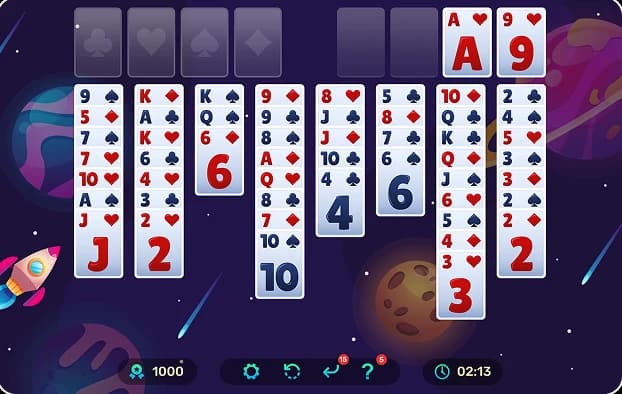
Old Card Games: 12 of the Oldest Card Games Ever Played
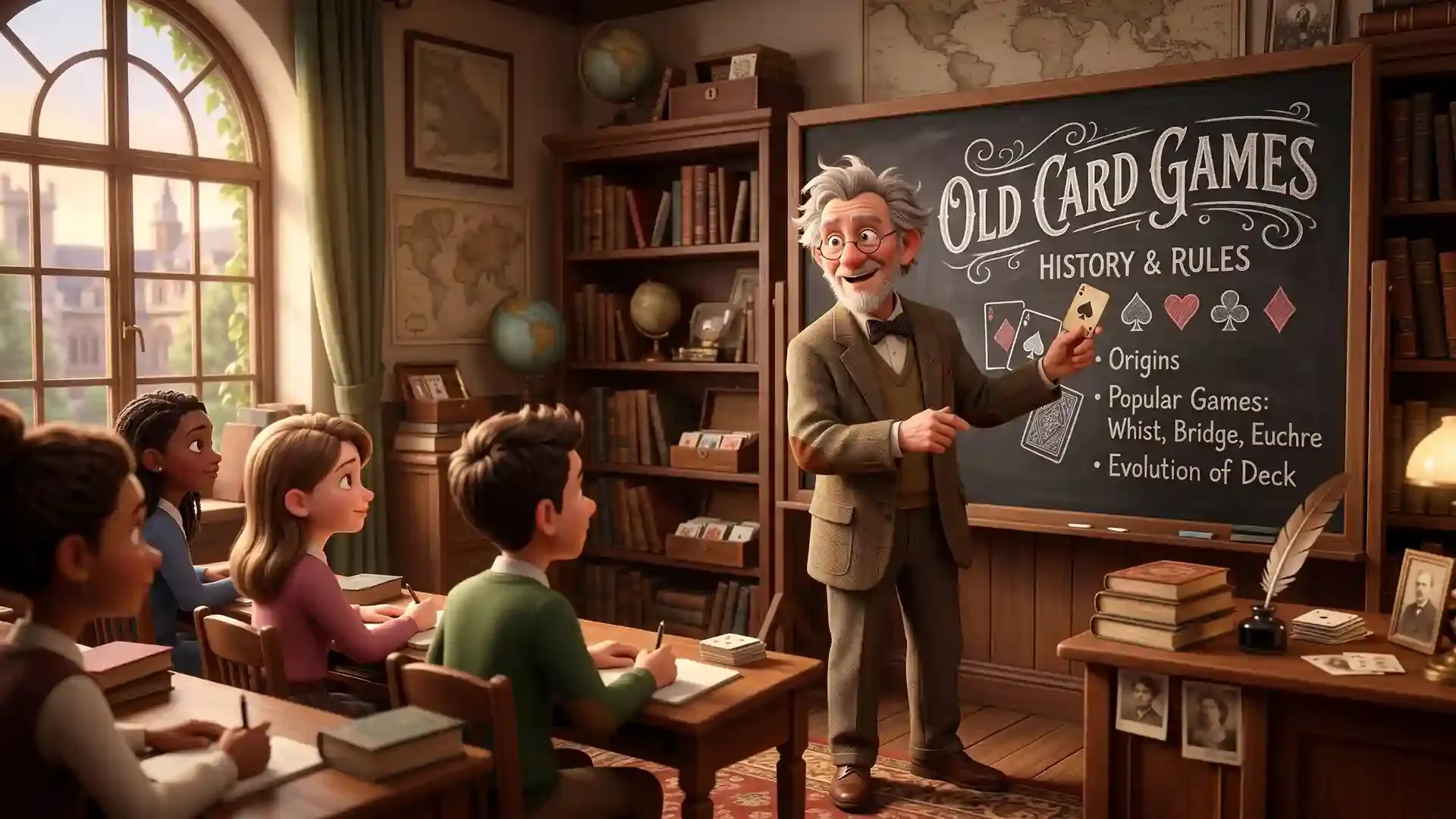
Grab any deck from a drawer and shuffle it. But, do you know, you are holding a thousand years of history. Long before online poker or Vegas lights, people sat around tables with paper cards. They bet, bluffed and laughed together. Those old card games weren't just time killers. They were battles of wit. Whether you play online FreeCell or Solitaire today these old games will make you think why these were so engaging.
Some of those games don't exist anymore. Others, they survived. You might even know a few names. But the really ancient ones? Today, card gaming has evolved far beyond traditional tables.
Table of contents
12 Oldest Card Games in History
Most people have never heard of them. Here is a quick look at the heavy hitters. These games span continents and centuries.
| Name | Years (Est.) | Country of Origin | No. of Players |
|---|---|---|---|
| The Leaf Game (Yezi Ge) | 9th Century | China | 2+ |
| Mamluk Cards | 13th Century | Egypt | Varies |
| Ganjifa | 16th Century | India | 2-4 |
| Madiao (Paper Tiger) | 17th Century | China | 3-4 |
| Karnöffel | 1426 | Germany | 4 |
| Tarot (Tarocchi) | Mid-15th Century | Italy | 3-4 |
| Thirty-One | 1440 | Spain | 2-7 |
| Primero | 1526 | Spain | 2-6 |
| Ombre | 1600s | Spain | 3 |
| Cribbage | 17th Century | England | 2-4 |
| Blackjack (Ventiuna) | 1700 | France/Spain | 2-7 |
| Whist | 18th Century | England | 4 |
From card games to play by yourself to competitive online solitaire formats, the world of cards keeps expanding.
The Leaf Game (Yezi Ge)
Historians point to this one as the starting point originated in China during the 800s. Players used leaf-shaped paper. Nobody knows the exact rules anymore. But the idea spread like fire. Today, people searching for how to play FreeCell often discover how deeply connected modern games are to ancient card traditions.
Mamluk Cards
During the 13th century in Egypt this game was present. The decks used were gorgeous with gold paint, fancy calligraphy. There were polo sticks as suits. Europeans saw these and thought, "We need that." Our modern hearts, spades, and club card games came from these.
Ganjifa
India and Persia gave us these beautiful, round cards that were hand-painted. Some decks had 96 cards. As per some source, only royalty played this one at first. A few artists still paint them by hand. Games like Ganjifa show that people were using strategy like modern day FreeCell strategy in card games long before modern games. Complex card game strategies have existed for centuries.
Karnöffel
Somewhere in Germany around 1426 this game existed. This might be the first card game with a living rulebook. The card rankings are strange. Sometimes the lowest card beats the highest one. You can still find people playing this in small German towns. Many historians compare its strategic depth to modern card games that you can play by yourself (FreeCell and Solitaire).
Madiao (Paper Tiger)
During the 1600s in China, the Madiao game was present. This one used 40 cards. It helped create the "Rummy" style games you play today. Not bad for a four-hundred-year-old idea.
Tarot Card Games (Tarocchi)
Forget the fortune teller stuff. Tarot started as a serious game. In Italy during the mid-1400s with seventy-eight cards and complex tricks. These highly strategic systems laid the groundwork for later solitaire-based thinking games and even inspired some mechanics used in hard FreeCell games today.
People played it like we play Bridge today. The psychic stuff came much later.
Thirty-One
It originated in Spain during 1440 with a simple goal. Get to 31 points in one suit. Fast rounds, easy to learn. You have probably played a version of this without knowing it. Unlike heavy strategy games, Thirty-One was casual and social, much like modern card games for family gatherings.
Primero
During the 1500s with four cards each person used to bet, bluff. This is the grandfather of Poker. English sailors brought it home and the rest is history.
Ombre
Originally from Spain, 1600s with three players and complex bidding. This game ruled European fancy salons for a hundred years. Too complicated for most people now. But it paved the way for Bridge.
Cribbage
An English poet invented this one in the 1600s. Sir John Suckling. He added the peg board for scoring. That is why old card games like this one still show up in bars today. The board keeps it moving.
Blackjack (Ventiuna)
Cervantes wrote about this one in the early 1600s. He called it Ventiuna. Twenty-One. French casinos picked it up around 1700. Now it is the king of the casino floor.
Whist
In England during the 1700s with four players and two teams. Simple trick-taking. Edgar Allan Poe wrote a story about it. That is how big Whist was. Bridge eventually pushed it aside, but old players still love it.
Whist also inspired structured gameplay systems still seen today in modern board or card games worldwide.
What Was the First Card Game Ever Invented?
Depends how you define "game." If you mean physical cards? The Mamluk decks win.
If you mean actual rules we can still play? That is Karnöffel of Germany from around 1426. No doubt.
But if you ask what was the first card game ever, period? The first card game was almost certainly The Leaf Game (China, 9th century). We just do not have the rulebook anymore.
So when was the first card game invented? Roughly 800 to 900 AD. Paper came first and then printing. That card game changed the world.
Old Card Games That Are Still Played Today
Not every old game vanished. Some are still thriving. Karnöffel survives in a few German villages. Tarocchi has tournaments in France and Italy right now. Blackjack is everywhere - Vegas, Atlantic City and on your phone. Cribbage has leagues across the US and UK. Ganjifa is coming back slowly. Young artists in India are painting new decks by hand. Whist is harder to find, but old social clubs keep it going. Even Primero shows up at Spanish festivals sometimes. Yezi Ge is gone. Many card games have various benefits therefore they are still played today.
Conclusion — A Thousand Years of Card Playing
We have played cards for over a thousand years. The games changed. The faces on the kings changed. But the feeling never did. We still shuffle, deal, bet, bluff and laugh.
Next time you pick up a deck, remember the old games. Someone in ancient China started this. Sailors carried it across oceans and Indians painted them. Soldiers played it in trenches. Grandparents taught grandchildren. That is a pretty good run for some printed paper.
FAQs
- The Leaf Game, Karnöffel, Ganjifa, Primero, and Whist are some of the oldest game.
- The Leaf Game is the oldest game but if you want continuous play Karnöffel (1426) is the oldest.
- It was invented during the 9th century in China (Tang Dynasty).
- It was done through woodblock printing. The designs were carved then it was inked. Later it was pressed onto paper.
- Yes. Japan had Tenshō Karuta. Persia and India had Ganjifa. Round cards. Totally different from Western decks.
- Easy games survived. Blackjack and Cribbage stayed popular because they were simple and quick to play. Hard games like Ombre faded away because people didn’t want to spend time learning them. Games that changed with the times lasted longer.
FreeCell.game vs Other FreeCell Websites: Best Comparison
FreeCell.game vs other FreeCell websites compared by speed, ads, mobile support, solvers, and numbered deals. Discover the best FreeCell site online.

Card Games vs Board Games: Which Trains Your Brain Better ?
Discover whether card games or board games provide better brain training for memory, focus, strategy, and problem-solving.
Why More People Are Switching From Offline FreeCell to Online Play
Find out why players are moving from classic desktop FreeCell to browser-based play and what online versions offer today.
Is FreeCell More Popular in the US or the UK? What the Data Says
Compare FreeCell popularity in the US and UK using search volume, per-capita data, and player interest.
Is Every Game of FreeCell Winnable? Strategy & Tips
Is every game of FreeCell winnable? Learn the truth behind FreeCell solvability, why most games can be won, and what makes some deals impossible.