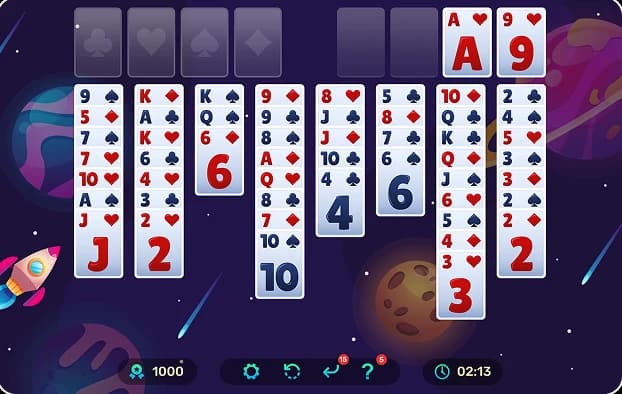
6 Science-Backed Benefits of Card Games for Brain Health


Forget expensive 'brain training' apps. A simple deck of cards might be the most effective tool for keeping your mind sharp as you age. From FreeCell to Bridge, here is what the latest neurological research says about your favorite pastime.
The response would be affirmative, as recent scientific research shows that playing cards is not just a means of passing the time. On the contrary, card games are brain workouts. Therefore, from a neurological perspective, playing cards enhances cognitive abilities, and now days its quite easy to play freecell online or any other card games online.
Table of contents
From Theory to Play: Matching Game Mechanics to Brain Benefits
While the science confirms that card games are a "workout" for your mind, not every game targets the same cognitive area. Depending on whether you want to improve your long-term planning, sharpen your working memory, or simply de-stress, different variations offer unique neurological benefits. The table below maps these specific brain benefits to the most popular games discussed above.
| Game | Primary Brain Benefit | Scientific Connection | Difficulty Level |
|---|---|---|---|
| Bridge | Social Cooperation & Deduction | Social Bonus: Reduces isolation and enhances logical reasoning. | High |
| Spider Solitaire | Sequencing & Strategic Planning | Executive Function: Trains the brain to manage complex, multi-step tasks. | High |
| FreeCell | Deep Strategy & Problem Solving | Cognitive Flexibility: Requires constant shifting of tactics based on available cells. | Medium |
| Poker | Risk Assessment & Focus | Emotional Regulation: Boosts dopamine while training concentration under pressure. | High |
| Classic Solitaire | Pattern Recognition | Mental Agility: Keeps the brain young by identifying quick visual sequences. | Low |
| Hearts | Working Memory | Memory Preservation: Forces the brain to track cards played vs. cards remaining. | Medium |
| Rummy | Adaptability & Focus | Stress Reduction: Provides a rhythmic, focused "time out" from daily anxiety. | Medium |
The Brain Benefits of Card Games, Backed by Research
Your brain is like a muscle. The more you exercise it with different patterns, rules and play the stronger it becomes. Here are the ways that card games "work" your brain.
1. Sharpens Memory
The most obvious benefits of playing card games to play by yourself or others is that they require you to use your memory. For example, in games such as Hearts and Spades, you need to keep track of what cards have been played and what cards remain in your opponent's hands. This "logging" helps build your working memory. This is especially important for older people as it preserves the capacity to retrieve information rapidly in real life.
2. Builds Strategic Thinking & Problem-Solving
Card games are like solving a puzzle. You are given a random set of cards and must decide on the best course to win. To excel at this, gamers sometimes look for the best strategy for freecell and other puzzle games to boost their chances of success. This is achieved through "executive function", the region of the brain that is used for planning and decision-making.
3. Improves Focus and Concentration
In our world of so many digital distractions, card games require full attention. You can't play Solitaire or Rummy while texting. You have to be paying attention. That's why freecell online vs offline games are preferred. Online versions typically have a streamlined interface that helps train the brain to block out distractions.
4. Promotes Cognitive Flexibility
The brain's ability to shift focus between two ideas is known as cognitive flexibility. For those who play Baker's Game solitaire, a more challenging version of FreeCell, the cognitive flexibility required to deal with empty cells and foundation cells is astronomical. "Mental agility" helps keep the brain young.
5. Can Possibly Prevent Dementia
But the most exciting finding to date is that cognitive activities can create cognitive reserve. Performing mental exercises such as learning how to play freecell solitaire and devising ways to emerge victorious in the game will keep your brain healthy. Mental exercises have long been established as a means to combat mental degeneration and even dementia.
6. Reduces Stress and Boosts Mood
Stress kills brain cells. Card playing induces the release of dopamine. Whether it’s a one-man card game or a game played with your child involving two players, the stress-relieving effects of card playing lower cortisol levels and ensure that your brain is not affected by the physical aspects of stress. This is also why kids memory games are increasingly recommended by educators, low-stakes, turn-based play keeps cortisol down while keeping young minds fully engaged.
The Social Bonus: Card Games Are Good for Emotional Health Too
While it is true that there are positive effects on one’s mentality, it is not smart to overlook the aspect of the social part of playing cards. It is essential for senior individuals to play cards since it helps with their engagement. In terms of keeping one’s mind occupied, it plays an important role.
Which Card Games Are Best for Your Brain?
To get the most out of the brain exercise, some variations are more challenging than others. For instance, if you want to challenge yourself, you could learn the 4 deck freecell rules to make it more complex. Other great options include:
- Bridge: Widely considered the "gold standard" for brain health.
- FreeCell & Solitaire: Excellent for solo players to improve pattern recognition.
- Poker: Great for emotional regulation and risk assessment.
- History of FreeCell Solitaire: Understanding the origins of these games can also provide a fun, historical context to your mental training.
For an extra challenge, there are even some people who try their hands at solving difficult puzzles, like figuring out how to beat the freecell game 11982, which was once thought to be one of the few impossible deals.
Conclusion
Are card games brain food? The answer is definitely yes; they are among the easiest and most efficient means to train your brain. Be it freecell fewest moves, or simply a leisure game with friends, your brain is getting a big treat.
The next time you find yourself with some spare time, do not scroll through your social media newsfeed; instead, play some card games with your deck. Your brain will love you for it.
FAQs
- Yes. Playing cards involves various brain activities such as memory, spatial reasoning, and planning. These activities keep the brain active and can improve cognitive abilities.
- Playing cards is an ideal activity for older people to remain socially engaged and to help prevent cognitive impairment. The game is good for developing fine motor control and memory.
- Absolutely. Playing games offers a "time out" from worries. Achieving success or solving a complex puzzle can also decrease stress.
- Both activities are perfect! However, playing cards requires more memory than playing board games. Additionally, playing cards involves several probability calculations, while playing board games requires spatial skills.
FreeCell.game vs Other FreeCell Websites: Best Comparison
FreeCell.game vs other FreeCell websites compared by speed, ads, mobile support, solvers, and numbered deals. Discover the best FreeCell site online.

Card Games vs Board Games: Which Trains Your Brain Better ?
Discover whether card games or board games provide better brain training for memory, focus, strategy, and problem-solving.
Why More People Are Switching From Offline FreeCell to Online Play
Find out why players are moving from classic desktop FreeCell to browser-based play and what online versions offer today.
Is FreeCell More Popular in the US or the UK? What the Data Says
Compare FreeCell popularity in the US and UK using search volume, per-capita data, and player interest.
Is Every Game of FreeCell Winnable? Strategy & Tips
Is every game of FreeCell winnable? Learn the truth behind FreeCell solvability, why most games can be won, and what makes some deals impossible.